
Bilikal Rangaswamy Betta is a forested granite hill named for the pale granite exposed at its summit: "bilikal" means white rock in Kannada. A Ranganathaswamy (Perumal) temple sits at the top, built against a large granite boulder, and draws pilgrims on Saturdays. Two routes reach the summit: a jeep track controlled by a Karnataka Forest Department checkpost, and a walking trail through the same protected forest. The walking trail climbs through tamarind-shaded farmland before entering dry deciduous forest. A wildlife trench marks the sanctuary boundary: a deep concrete ditch built to limit elephant movement into surrounding farmland. From that point onward, elephant dung is commonly found along the trail. The trek route carries no formal checkpost, but it runs through a wildlife corridor in restricted forest. The final section is steep, on loose rock, and slippery after rain.
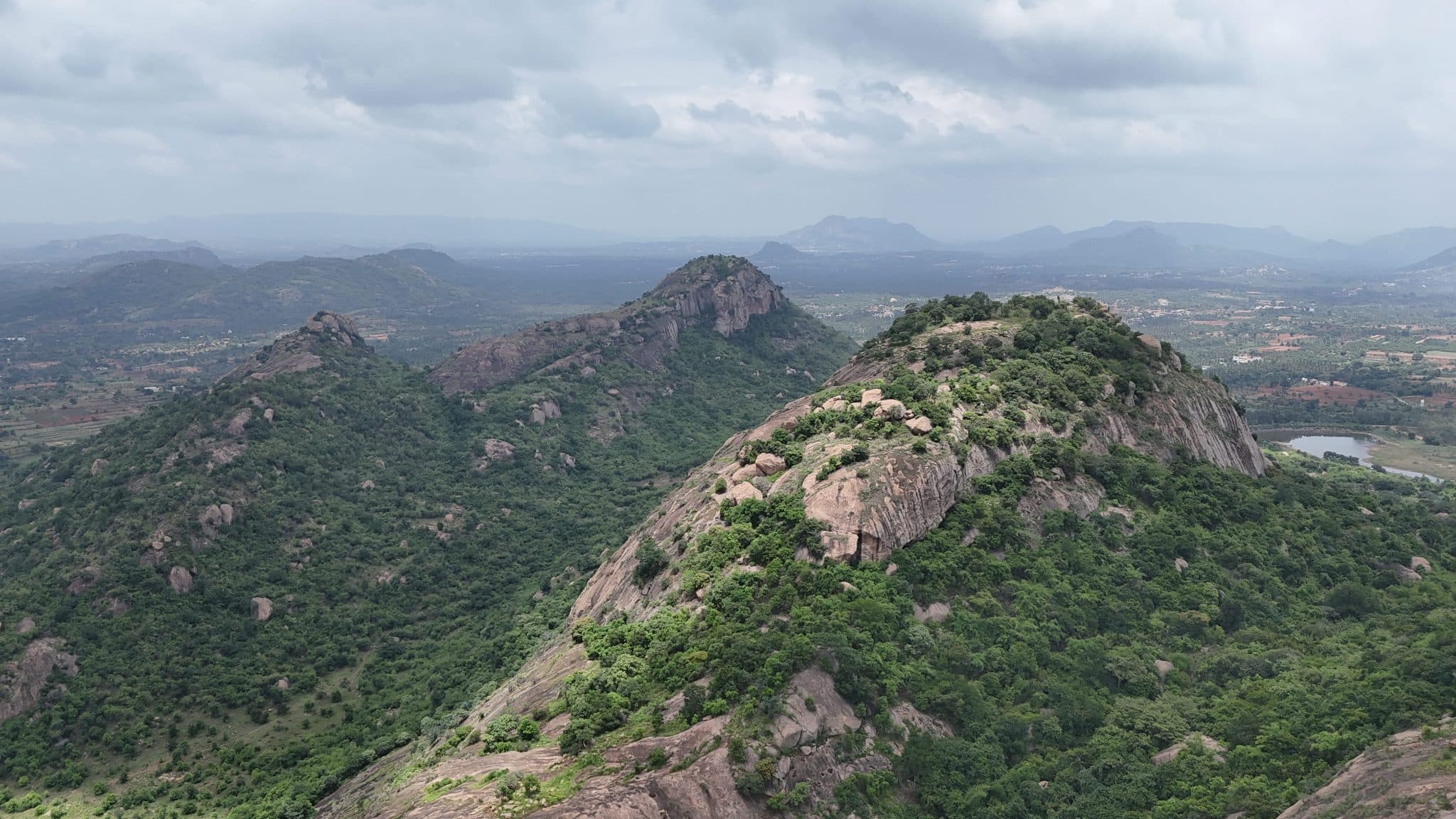
Bananthimari Betta, locally known as Karadi Betta, consists of two rocky hillocks within Bananthimari Reserve Forest. This trail leads to Chikkabananthamari, the smaller of the two peaks, starting from Bananthimari Temple. The lower section passes through bamboo vegetation and a small pond before entering the rocky forest. The route climbs through large boulders and rocky outcrops, including formations resembling caves, with a viewpoint towards the surrounding lakes. Higher up, the terrain becomes steeper and involves scrambling over rocks, with a section providing a view of the Arkavathi River. The trail ends at a broad, relatively flat summit, from where Bananthimari Temple and the larger Bananthimari hill are visible.
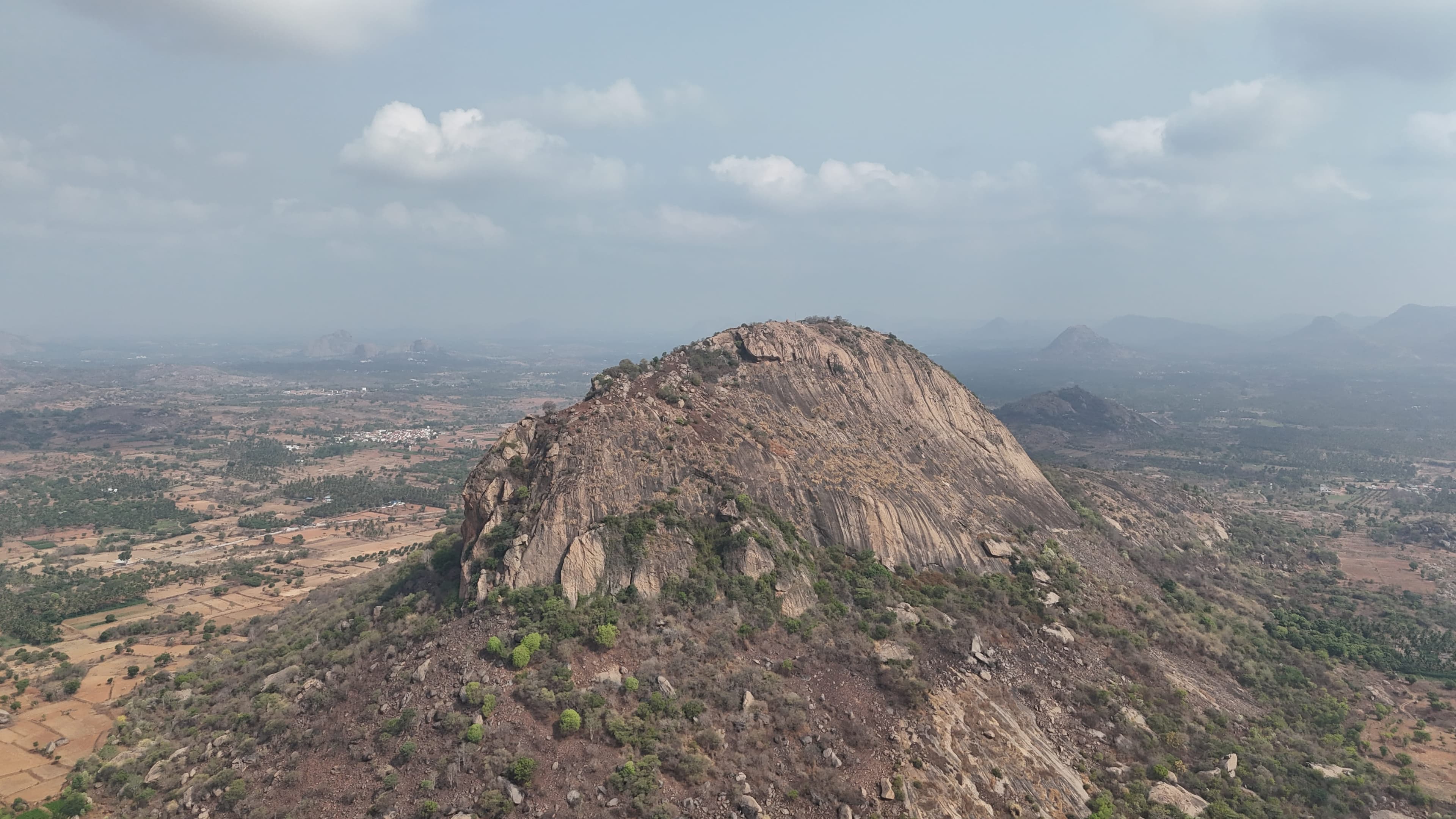
Sri Narasimhaswamy Betta is a little-known fort hill with the remains of historic fortifications leading to a hilltop Narasimha Swamy temple. The trail begins with a short walk on a concrete road before joining a well-defined footpath that passes through the old fort entrance. Much of the ascent follows ancient rock-cut steps, with ruined fort walls appearing at intervals as the climb progresses. Higher up, sections of the fortifications and former lookout points provide insight into the hill's defensive role. The summit contains a small temple and a perennial pond, with the fort ruins extending around the hilltop. Trees growing over parts of the masonry give the ruins a distinctive character, while the hill remains relatively quiet outside local festival days.