
Ramadevara Betta is India's first vulture sanctuary and the filming location for the 1975 Hindi film Sholay, set in the granite hills near Ramanagara. The 346-hectare sanctuary was formally declared in 2012 under the Wildlife (Protection) Act, though the area had been reserved since 1917 under the Maharaja of Mysore State. The marked trail begins with stone steps and divides naturally into two sections: trailhead to the Ram temple, with smaller shrines lining the approach and a pond alongside the temple; and Ram temple to the summit. At the Ram temple the trail forks: one branch leads to Sri Kote Anjaneya Gudi, the other to the peak. The final ascent crosses a granite rock wall with steps cut into the face and metal railings along the exposed section. The summit is a flat granite platform with unobstructed views of the surrounding hills on all sides.

Bairaveshwara Betta is a steep hillside trail near the village of Annahalli, in Ramnagara district. The hill takes its name from the Bairaveshwara temple that sits roughly three-quarters of the way to the top. The climb rises sharply from the base with no gradual opening; iron railings fixed by villagers line the steepest sections and are in regular use even in dry conditions. A small pond with white lotus flowers sits roughly halfway up and marks a natural rest point. The temple is where most hikers stop; the trail continues past it to a grass-covered top with views of the surrounding hills. Annahalli Lake lies at the base of the hill and is visible from the upper sections of the climb. The exposed rock surface turns slippery after rain, and the gradient makes the railings necessary rather than optional on wet days.

Bilikal Rangaswamy Betta is a forested granite hill named for the pale granite exposed at its summit: "bilikal" means white rock in Kannada. A Ranganathaswamy (Perumal) temple sits at the top, built against a large granite boulder, and draws pilgrims on Saturdays. Two routes reach the summit: a jeep track controlled by a Karnataka Forest Department checkpost, and a walking trail through the same protected forest. The walking trail climbs through tamarind-shaded farmland before entering dry deciduous forest. A wildlife trench marks the sanctuary boundary: a deep concrete ditch built to limit elephant movement into surrounding farmland. From that point onward, elephant dung is commonly found along the trail. The trek route carries no formal checkpost, but it runs through a wildlife corridor in restricted forest. The final section is steep, on loose rock, and slippery after rain.
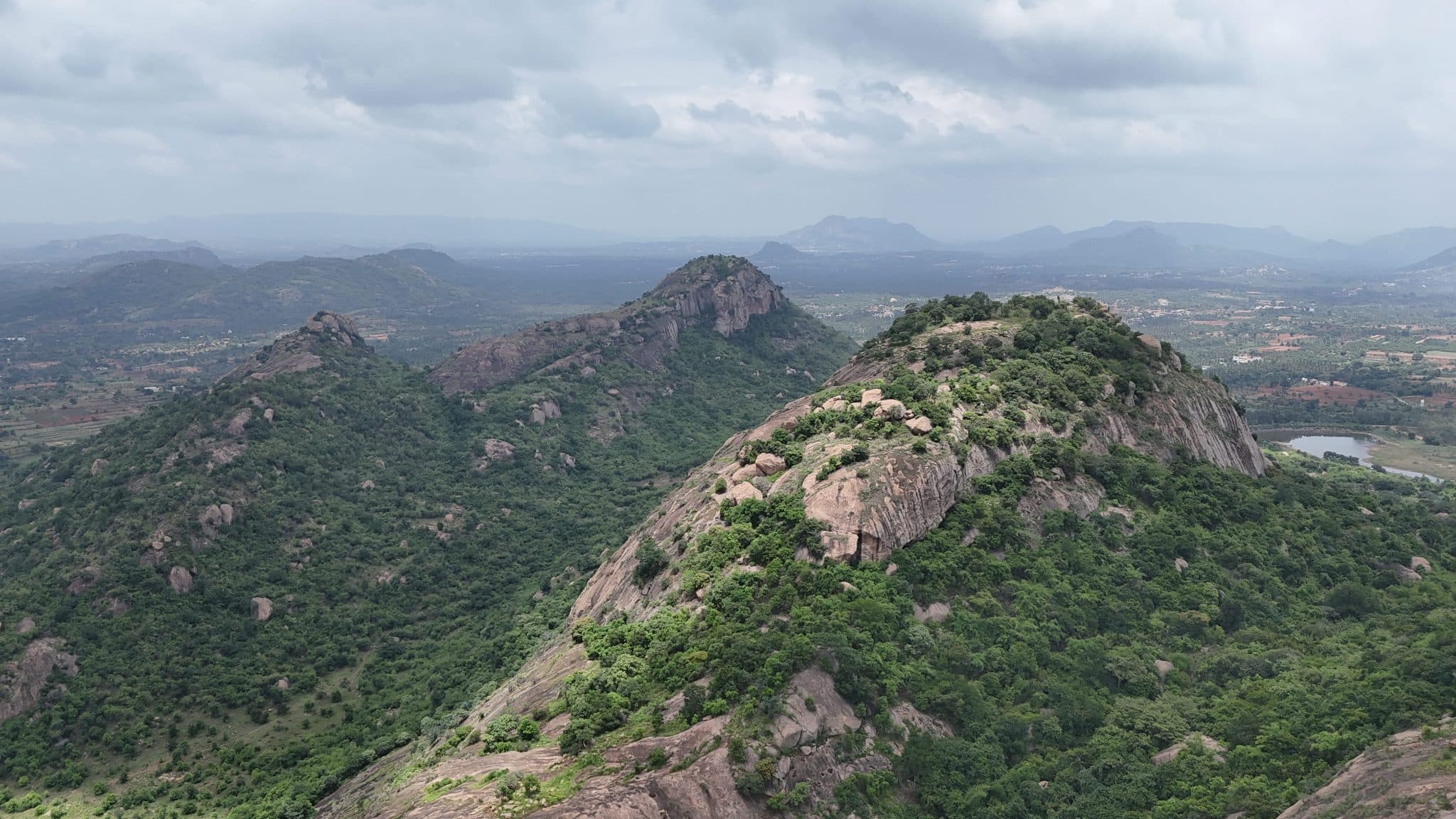
Bananthimari Betta, locally known as Karadi Betta, consists of two rocky hillocks within Bananthimari Reserve Forest. This trail leads to Chikkabananthamari, the smaller of the two peaks, starting from Bananthimari Temple. The lower section passes through bamboo vegetation and a small pond before entering the rocky forest. The route climbs through large boulders and rocky outcrops, including formations resembling caves, with a viewpoint towards the surrounding lakes. Higher up, the terrain becomes steeper and involves scrambling over rocks, with a section providing a view of the Arkavathi River. The trail ends at a broad, relatively flat summit, from where Bananthimari Temple and the larger Bananthimari hill are visible.
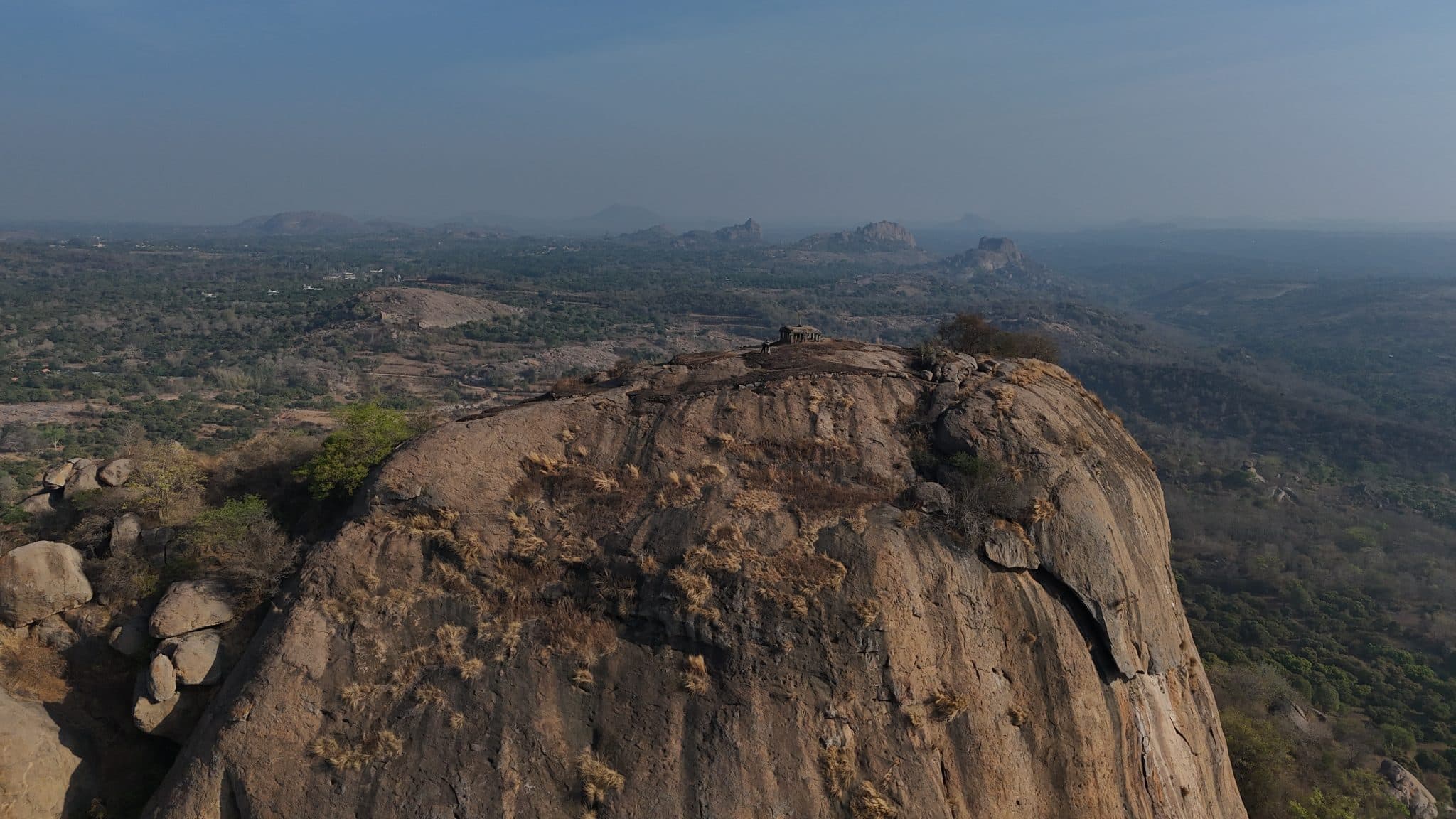
Thalavadi Betta Fort is a lesser-known hill fort near Ramanagara that takes hikers through the ruins of an old fort before reaching a scenic summit. Despite being close to Bengaluru, it remains relatively less visited.
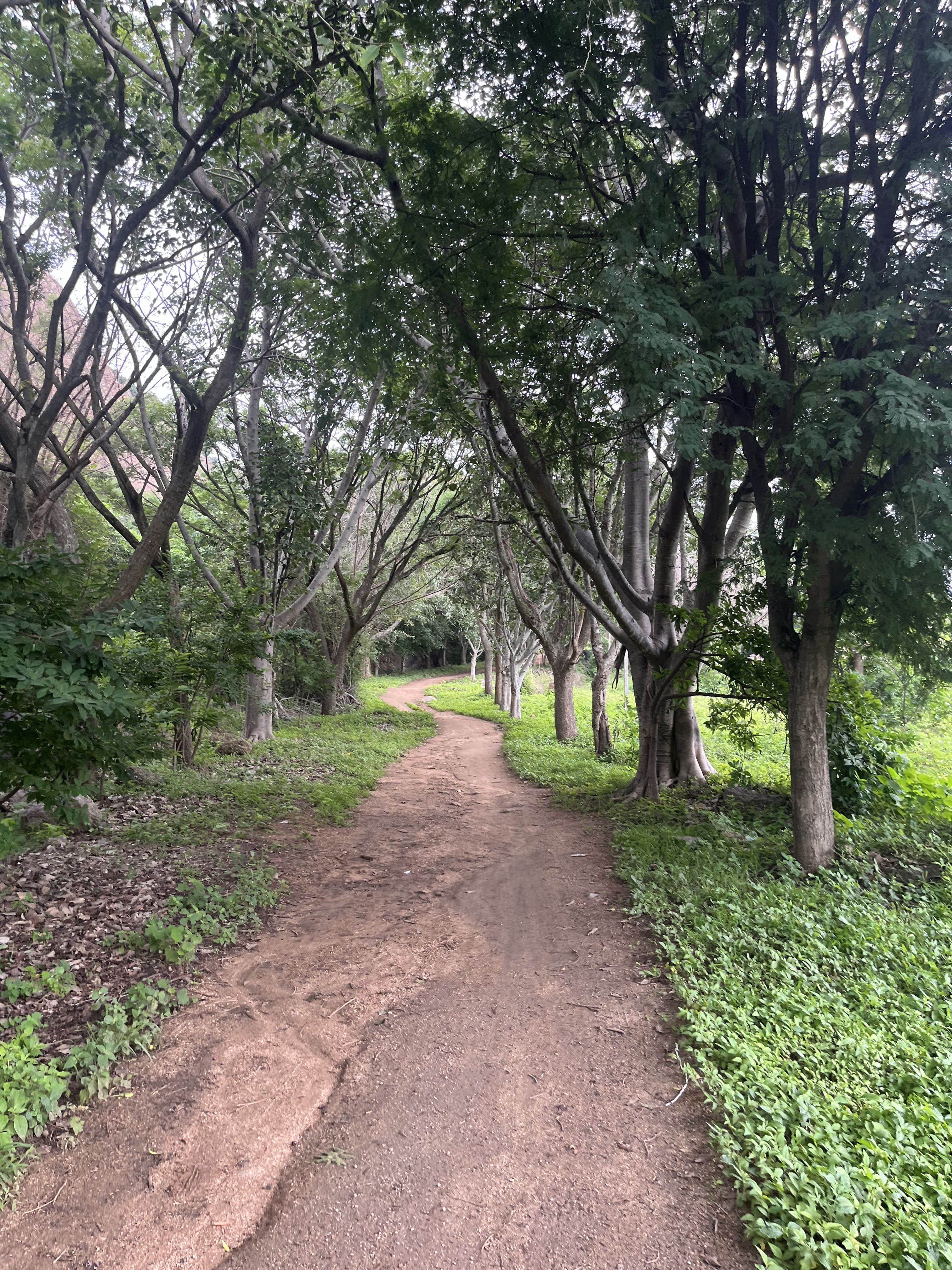
The Kunagalu Betta trail combines granite formations with cultural landmarks, making it distinct from many other hills around Ramanagara. The route begins on a motorable track before transitioning onto footpaths that weave through boulders, a narrow cave passage, and short rocky sections. Along the way are small shrines, including a temple dedicated to the local deity near the summit, while natural rock formations such as the hill's well-known puppy-shaped boulder add to the character of the landscape. The summit provides an open view of the surrounding hills, coconut plantations, agricultural fields, and the Arkavathi valley. Although the trail features several interesting natural and cultural landmarks, much of the lower route is accessible to motorcycles, and the resulting biker traffic can make the trail crowded, particularly on weekends.
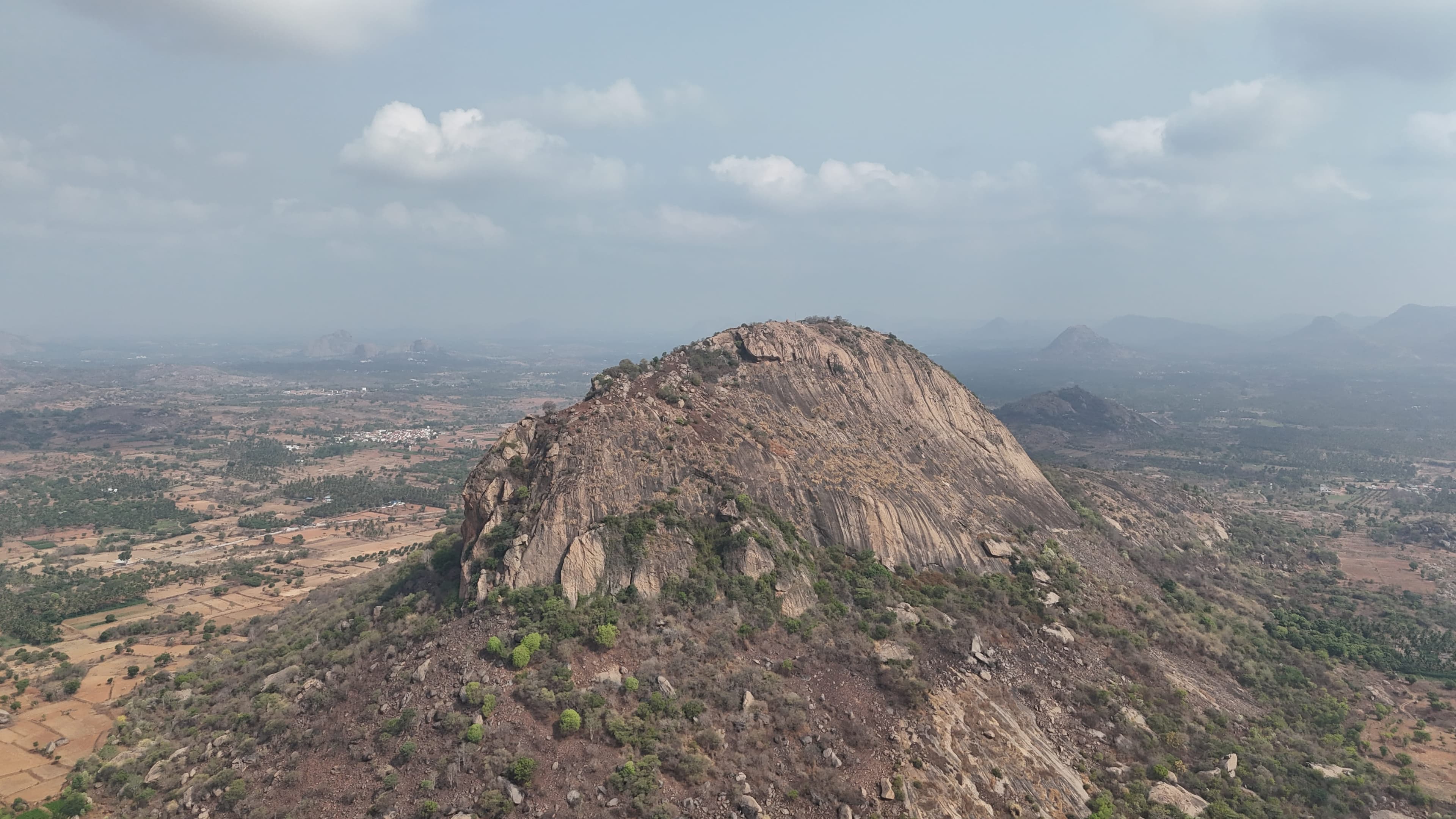
Sri Narasimhaswamy Betta is a little-known fort hill with the remains of historic fortifications leading to a hilltop Narasimha Swamy temple. The trail begins with a short walk on a concrete road before joining a well-defined footpath that passes through the old fort entrance. Much of the ascent follows ancient rock-cut steps, with ruined fort walls appearing at intervals as the climb progresses. Higher up, sections of the fortifications and former lookout points provide insight into the hill's defensive role. The summit contains a small temple and a perennial pond, with the fort ruins extending around the hilltop. Trees growing over parts of the masonry give the ruins a distinctive character, while the hill remains relatively quiet outside local festival days.

Yathirajaswamy Betta is a short hill trail in the Ramanagara region, known for its gradual climb and accessibility rather than steep terrain. The route follows a well-defined path over granite slopes with scattered scrub vegetation, making it suitable for families and children. The summit is occupied by the Anjaneyaswamy Temple, which is the main destination of the hike. Remains of animal sacrifice can sometimes be seen around the temple premises, reflecting local ritual practices. The hill offers open views of the surrounding rocky landscape and nearby villages, while its uncomplicated ascent makes it one of the easier granite hill walks in the area.
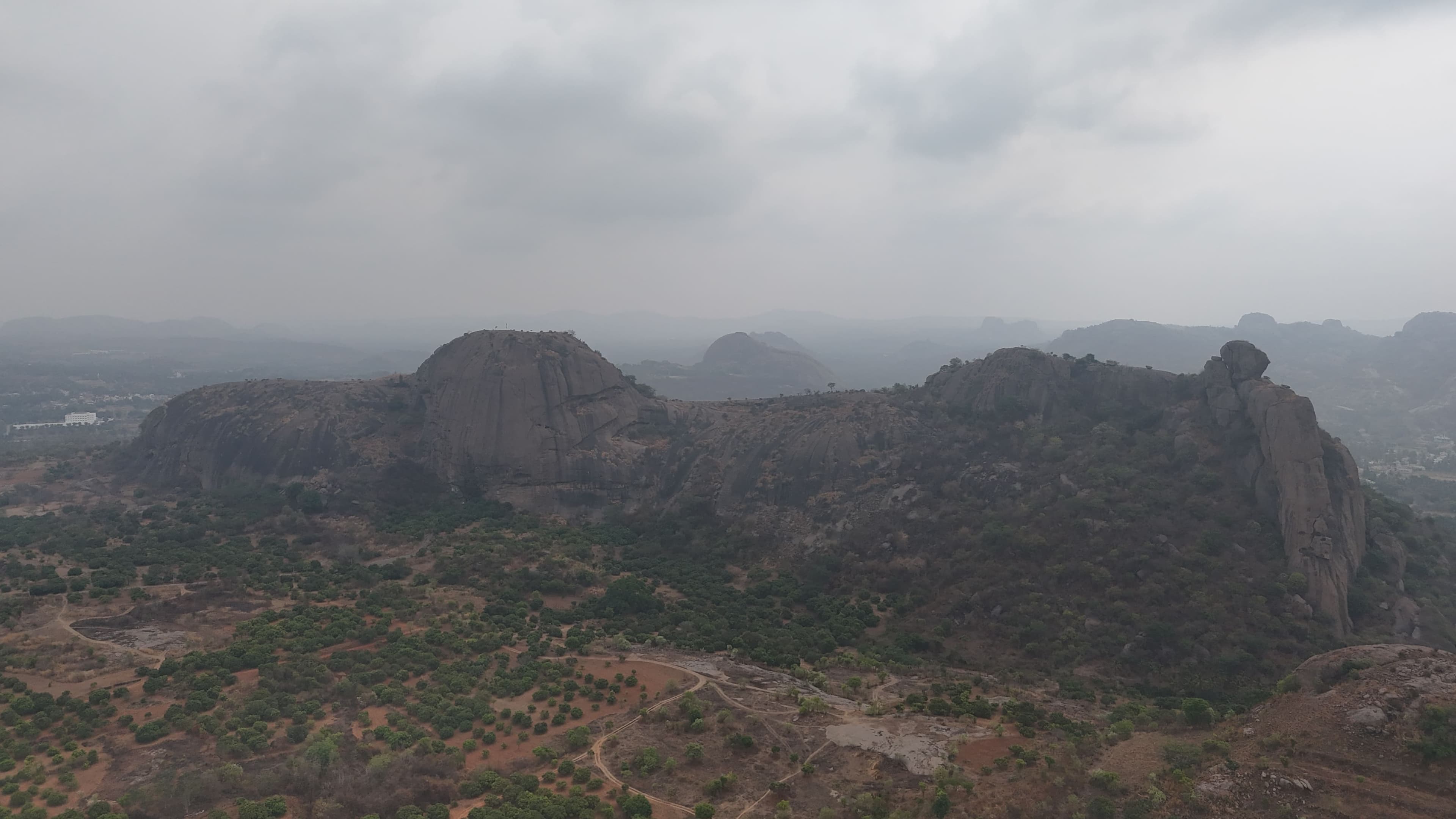
Jala Siddeshwara Betta is a short granite hill trail that begins at the Jala Siddeshwara Temple, which is accessible by road and has limited parking nearby. The initial section passes through large granite formations containing several natural caves before emerging onto the exposed monolith for the final climb. Despite being less than a kilometre long, the trail quickly gains elevation and ends at an open summit with expansive views of the surrounding countryside. The elevated vantage point also overlooks the Bengaluru–Mysuru Expressway, making it a distinctive landmark visible from the hill.