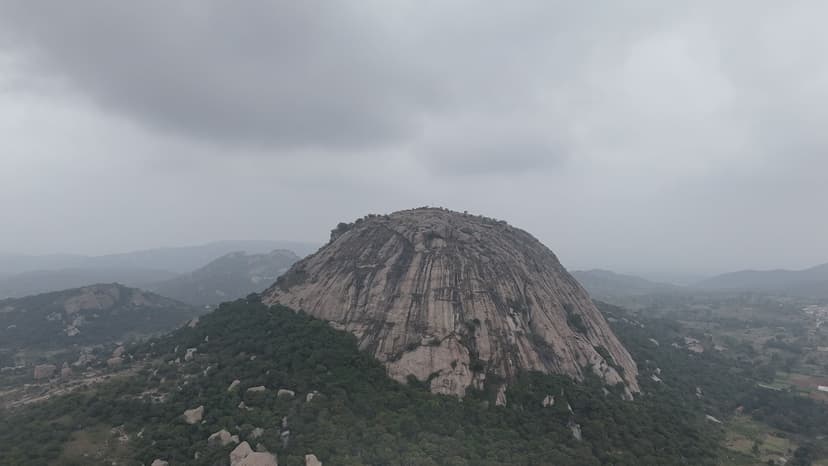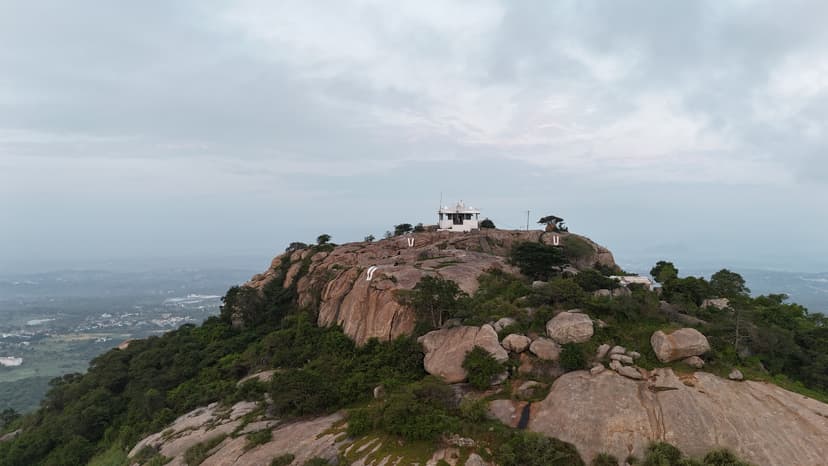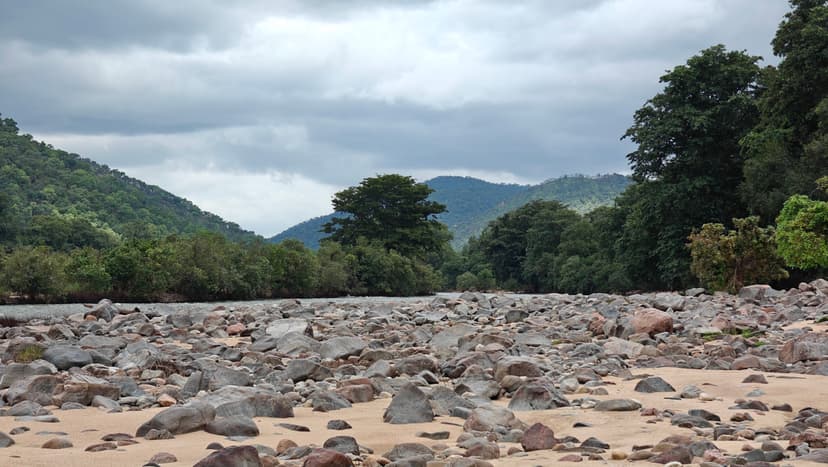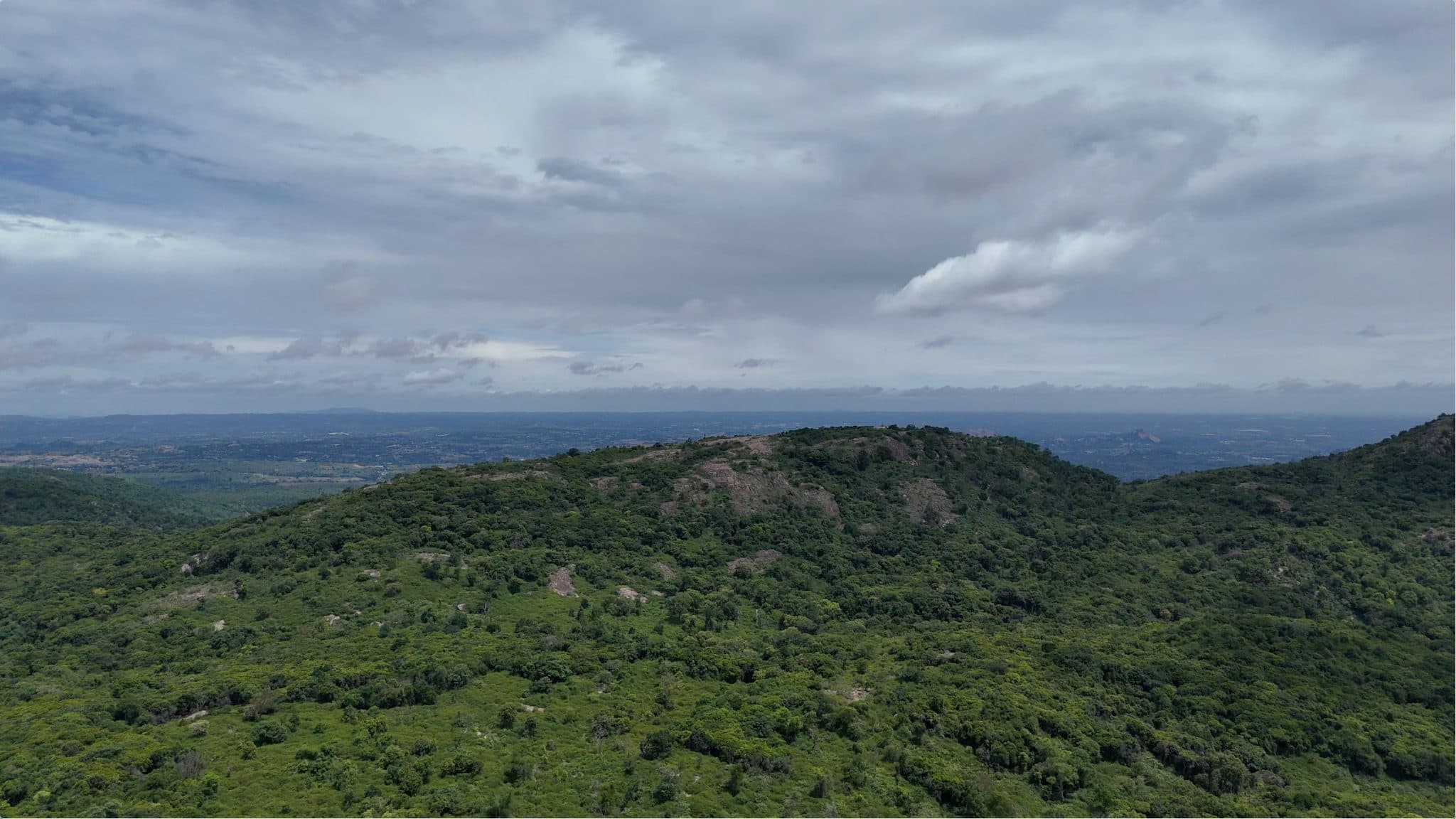

The trail takes you on an adventure within a reserved forest going through dirt trails, forest alleyways and rocky ascents in quick succession. The place is truly remote and you will feel one with the forest as you look around and take it all in. As you reach the top you are greeted with views of rolling hills , a temple and also a lotus pond. The trail is frequented by elephants, boars, leopards and we spotted signs of the same on our way so ensure you go in a group. The way to the trial is smooth sailing apart from the last 3kms which were proper off-roading - I hadn't taken my German sedan for the excursion and I kind of wished I hadn't but overall it was a mini adventure in itself.
Distance
9.21 km
Elevation gain
368 m
Route type
out-and-back
About this trail#
The trail passes through dense forest that remains green even during the peak of summer, unlike many trails around Bengaluru that become dry during this season. Wildlife activity is evident throughout the route, with elephant dung, wild boar diggings, and signs of gaurs commonly observed. Several shortcuts branch off the main trail, passing through dense undergrowth that gives parts of the hike a more enclosed forest character. The trail ends at the Ayyapaswamy Temple on the summit, where the surrounding landscape is covered by uninterrupted forest in every direction, reinforcing the area's remote setting despite the well-defined trail.
Trail Information#
Parking to the Edge of the Forest
From the parking area, the trail begins with a pleasant walk through a rural village. These are not the densely packed villages commonly seen around Bangalore. Instead, the houses are widely spaced, connected by broad unpaved roads that are wide enough for tractors.
As you walk, you'll pass farmland growing seasonal crops such as chillies, tomatoes, flowers, and other produce depending on the time of year. Jackfruit trees are common along this stretch, and large shade trees line the route. You may also notice small watchtowers or raised platforms on nearby hills, used by farmers to keep an eye out for wild animals entering their fields.
Edge of the Forest
The trail eventually reaches the boundary of the forest. For a while, you'll walk with farmland on one side and dense forest on the other, separated by a narrow shrub-lined fence. Small openings appear at regular intervals, allowing access to the fields. These also provide convenient exit points if you need to leave the trail during your return journey.
Entering the Forest
After a short distance, the trail leaves the forest edge and enters dense woodland. Tall trees replace the shrubs, and the thick canopy provides excellent shade, making this one of the best forest walks around Bangalore.
This section is largely flat, with very little elevation gain, allowing you to enjoy the cool, peaceful surroundings before the climb begins.
Skirting the Peak
As you continue through the forest, you'll notice the trail follows the side of the hill, with the peak rising on one side and a valley on the other. Although the summit lies beyond the peak, the trail avoids a direct climb by skirting around it before crossing to the opposite side.
This section includes a few short but steeper ascents as you gradually gain elevation. As the trail changes direction, the villages come back into view, a clear indication that you've rounded the hill and are now approaching it from the other side. From here, the final climb to the summit is not far away.
Final Ascent
After skirting the peak, the trail levels out briefly before the final climb begins. This last ascent is rocky and moderately steep, requiring a little more effort than the earlier sections.
At the summit, you'll be welcomed by the Ayyapaswamy Temple, reached via its distinctive 18 sacred steps. The hilltop is also home to the ruins of an old fort wall, offering a glimpse into the site's history. A small water body, scattered trees providing shade, and plenty of open space make the summit an excellent place to rest and explore.
On a clear day, you'll be rewarded with sweeping views of the surrounding forests, villages, and farmland before retracing your steps back to the trailhead.
Getting there#
Trail route
Route flyby#
Preview the terrain before you go — a 3D fly-through of the full route.
Trail reports#
Trail conditions and experiences shared by hikers who've done this route


I saw very few people on the trail. It was surrounded by lush greenery, and there was a pleasant, cool breeze throughout, making the walk feel calm and refreshing.
GPX file#
Download the GPX route to use with your GPS device or hiking app. Learn how to use GPX files. To protect our trail data from bulk harvesting, downloads are limited to one per account per week.
🗺️
Sign in to download
Create a free account to download the GPX file and use it with your GPS device or hiking app.
Wildlife & Nature#
Wildlife activity is high along this trail. Elephant dung, wild boar signs, butterflies, and free-ranging cattle are commonly encountered. The cattle are partially domesticated and are allowed to graze unattended in the forest by local residents. They may become startled when approached by unfamiliar people, so hikers should give them space if encountered on the trail. As the route passes through active elephant habitat, it is advisable to start the hike after sunrise and return before sunset.
Camping#
Camping is not recommended on this trail. The route passes through a reserve forest where camping is not permitted, and access is primarily allowed because of the Ayyapaswamy Temple at the summit. Although the area offers suitable surroundings for camping, overnight stays could not be considered appropriate due to these restrictions.